AI vs. Automation: What’s the Difference?

Artificial Intelligence (AI) and automation are two major forces shaping the future of work and technology. They are often mentioned together, and many assume they are the same. In reality, AI and automation represent different concepts that serve distinct purposes within modern systems.

Automation focuses on executing defined tasks with limited human involvement, while AI involves systems capable of analyzing data, learning patterns, and making decisions. Understanding the difference between them is essential for organizations planning digital strategies, improving productivity, and managing resources efficiently.

This article examines both technologies, their origins, functions, and the ways they interact. It also explains their applications across industries and discusses how they influence business operations, workforce structure, and long-term economic development.


1. Defining Automation

Automation is the use of technology to perform repetitive or structured tasks without direct human control. It relies on predefined rules, instructions, and logic. The main goal is to achieve consistent, reliable execution of a process.

Key Features of Automation:

  • Follows fixed, rule-based instructions
  • Handles repetitive and structured tasks
  • Operates within predictable environments
  • Reduces manual input and time consumption

Examples of Automation:

  • Assembly line machinery that welds, paints, or packages products
  • Email systems that automatically respond to specific inquiries
  • Payroll software that calculates salaries and taxes on schedule
  • Banking systems that process recurring transactions

Automation does not require reasoning or adaptation. Once programmed, it performs tasks exactly as instructed, repeating them until a change is introduced.


2. Defining Artificial Intelligence (AI)

Artificial Intelligence refers to systems or machines that can interpret information, analyze data, and make decisions similar to human reasoning. AI works beyond predefined rules by identifying patterns, learning from data, and adjusting to new conditions.

Key Features of AI:

  • Processes large sets of structured and unstructured data
  • Learns from outcomes and adjusts behavior
  • Recognizes patterns and predicts results
  • Supports decision-making in uncertain or dynamic environments

Examples of AI Applications:

  • Chatbots that interpret human language and respond contextually
  • Image recognition systems used in healthcare or security
  • Predictive analytics for sales forecasting or maintenance
  • Autonomous vehicles that navigate changing traffic conditions

Unlike automation, AI adapts to new information. It does not rely entirely on explicit instructions; it learns and improves through experience.


3. The Core Difference: Rules vs. Learning

The fundamental distinction between automation and AI lies in how tasks are executed and improved over time.

Automation executes rules. Once programmed, it follows instructions consistently but cannot change its logic without human intervention. AI, on the other hand, learns. It analyzes outcomes and refines its models based on feedback and data.

ConceptAutomationArtificial Intelligence
NatureRule-basedData-driven and adaptive
OperationExecutes defined instructionsLearns and improves from data
Human RoleSetup and monitoringTraining, supervision, and refinement
ComplexityHandles structured, repetitive workHandles dynamic and complex problems
OutputConsistent resultsVariable results based on context

Automation is therefore static, while AI is dynamic. They can function separately or together, depending on the purpose and the complexity of the system.


4. Historical Development

The origins of automation date back to the industrial revolution, where machines replaced manual labor in repetitive operations. Steam engines, mechanical looms, and assembly lines introduced the first examples of process automation.

AI emerged much later, with its roots in computer science. Early researchers in the 1950s explored how machines could simulate reasoning and problem-solving. Over time, increased computing power and data availability made practical AI systems possible.

Timeline Overview:

  • 18th–19th centuries: Mechanical and industrial automation
  • Early 20th century: Electrical and control systems
  • Mid-20th century: Digital automation through computers
  • 1950s–1980s: Foundational AI research
  • 2000s–present: Data-driven and machine learning–based AI

Both automation and AI have developed in parallel, with AI now enhancing the flexibility and intelligence of automated systems.


5. How Automation Works

Automation operates through defined steps and control systems that manage tasks. It follows a consistent process, which typically includes:

  1. Input: Receiving data or commands (e.g., sensor signals or user instructions).
  2. Processing: Executing predefined logic through software or machinery.
  3. Output: Producing a result such as a report, movement, or response.
  4. Feedback Loop: Monitoring performance to maintain reliability.

For example, an automated manufacturing line uses sensors to measure performance and adjust machine speed. However, it does not decide independently—adjustments occur according to preset thresholds.

Automation can exist in both physical systems (robots, conveyor belts) and software systems (scripts, workflows, and bots).


6. How AI Works

AI operates by processing data through algorithms that mimic cognitive functions. Machine learning (ML) is the core component of AI, allowing systems to learn from data patterns rather than following fixed logic.

AI systems typically go through the following process:

  1. Data Collection: Gathering relevant information from sensors, databases, or user input.
  2. Model Training: Using algorithms to find patterns in the data.
  3. Prediction or Decision-Making: Applying learned patterns to new information.
  4. Continuous Improvement: Updating models as new data is received.

An example is an AI-based recommendation system. It learns from user activity, analyzes preferences, and recommends future content. The process evolves automatically as more data becomes available.

AI’s adaptive nature enables flexibility in uncertain or changing environments, where manual programming would be inefficient.


7. When Automation and AI Work Together

Although distinct, AI and automation often operate in combination. This integration is known as intelligent automation or hyperautomation.

In this model, automation handles repetitive processes, while AI manages the interpretation and optimization of those processes.

Examples of Combined Systems:

  • Customer Support: Chatbots powered by AI interpret messages, while automation routes the query to the correct department.
  • Finance: AI detects unusual spending behavior, and automation blocks suspicious transactions.
  • Manufacturing: AI monitors equipment performance, and automation adjusts machinery accordingly.
  • Healthcare: AI identifies anomalies in scans, and automation records and distributes results.

By integrating AI into automation, organizations achieve both speed and adaptability. The system operates continuously and improves its performance through data analysis.


8. Industrial Applications

Both AI and automation are widely implemented across industries, each serving specific purposes.

Manufacturing

  • Automation: Manages assembly lines, welding, and material handling.
  • AI: Analyzes sensor data to predict maintenance needs and improve production flow.

Healthcare

  • Automation: Handles appointment scheduling, billing, and records management.
  • AI: Assists in diagnostics, medical imaging analysis, and drug development.

Finance

  • Automation: Processes transactions, reporting, and compliance tasks.
  • AI: Detects fraud, assesses credit risk, and forecasts market trends.

Retail

  • Automation: Manages inventory and logistics operations.
  • AI: Predicts demand, personalizes marketing, and analyzes consumer behavior.

Transportation

  • Automation: Controls navigation systems, route planning, and vehicle operation.
  • AI: Supports autonomous driving through image recognition and decision-making systems.

Each application demonstrates how automation ensures consistency while AI provides insight and adaptability.


9. The Business Impact

Automation and AI deliver significant value to organizations by improving efficiency, accuracy, and decision-making. However, their impact differs in scope.

Automation’s Impact:

  • Reduces repetitive workload
  • Increases production speed and process reliability
  • Ensures uniform quality across output

AI’s Impact:

  • Supports strategic decisions based on data analysis
  • Identifies opportunities for improvement
  • Enables predictive planning and forecasting

When used together, businesses benefit from both operational consistency and strategic intelligence.


10. Implementation Strategies

Implementing automation and AI requires structured planning and resource alignment.

For Automation:

  1. Identify repetitive and rule-based tasks.
  2. Select tools or systems suited to the environment.
  3. Establish performance metrics and feedback loops.
  4. Train staff to monitor and maintain systems.

For AI:

  1. Gather relevant, high-quality data.
  2. Choose machine learning models suited to the use case.
  3. Integrate AI with existing workflows.
  4. Review and refine models regularly to ensure accuracy.

Organizations often begin with basic automation and gradually integrate AI as data infrastructure and analytical capabilities mature.


11. Challenges and Limitations

Both AI and automation face operational and ethical challenges that influence adoption.

Automation Challenges:

  • Limited flexibility: cannot adapt to changes without reprogramming
  • Integration costs: requires compatible hardware and software
  • Job displacement concerns: reduces manual roles in certain industries

AI Challenges:

  • Data dependency: performance relies on data quality
  • Algorithm transparency: difficult to explain how AI systems reach conclusions
  • Bias and fairness: results can reflect inaccuracies present in training data
  • Regulation and governance: oversight is required to manage ethical risks

Managing these challenges requires collaboration between technologists, managers, and policymakers to ensure responsible use.


12. Workforce Transformation

Automation and AI both influence workforce composition, skill requirements, and organizational structure.

Automation’s Effect on Labor:

  • Reduces repetitive manual roles
  • Creates demand for technical maintenance and supervision roles

AI’s Effect on Labor:

  • Expands the need for data analysts, engineers, and algorithm specialists
  • Encourages development of hybrid roles combining domain expertise with digital skills

Organizations must provide training programs that align employees with the evolving digital landscape. Governments and educational institutions also play a role by supporting continuous skill development.


13. Economic and Strategic Significance

On a macroeconomic level, both AI and automation contribute to productivity growth and cost optimization.

Automation primarily improves operational efficiency. It enables organizations to produce more with fewer resources, reducing costs and increasing competitiveness.

AI drives innovation. It identifies new opportunities for product development, market analysis, and customer engagement. Combined, they enhance global economic output and reshape competitive advantage.

Long-term, economies that invest in both automation and AI infrastructure are better positioned to sustain growth and technological leadership.


14. Future Outlook

The boundary between AI and automation will continue to narrow as technologies merge. Future systems will feature autonomous decision-making integrated with operational execution.

Trends to Expect:

  • Hyperautomation: Widespread use of interconnected AI and automation tools for full process optimization.
  • Edge AI: Processing data near the source for faster responses in industrial and mobile systems.
  • Adaptive Manufacturing: Production systems that reconfigure automatically based on demand and supply data.
  • AI-Driven Management: Decision-support systems that assist executives with forecasting and planning.
  • Regulatory Frameworks: Standards governing ethical and secure use of automation and AI.

These developments will make intelligent, automated systems the foundation of modern enterprise operations.


15. Key Takeaways: Comparing AI and Automation

AspectAutomationArtificial Intelligence
Primary FunctionExecutes tasksLearns and adapts
Core PrincipleRule-based operationData-driven reasoning
Human RoleProgramming and monitoringTraining and interpretation
FlexibilityLowHigh
GoalConsistency and efficiencyInsight and adaptability
Example UseInvoice processingFraud detection
Data DependenceLimitedCentral to operation

Understanding this distinction helps organizations design effective digital strategies that balance predictability with intelligence.


Conclusion

AI and automation are interrelated but distinct technologies. Automation handles predictable processes through fixed rules, while AI analyzes data to learn, adapt, and improve over time.

Both contribute to operational excellence and innovation in different ways. Automation increases efficiency and accuracy in repetitive tasks, while AI enables interpretation, prediction, and decision-making. When integrated, they form systems capable of continuous improvement and autonomous operation.

The distinction between AI and automation is essential for leaders, policymakers, and professionals planning for the future of work. Recognizing their roles allows organizations to build balanced strategies—combining the reliability of automation with the intelligence of AI.

As industries evolve, the collaboration between human insight, automated execution, and artificial intelligence will define the next stage of digital transformation.
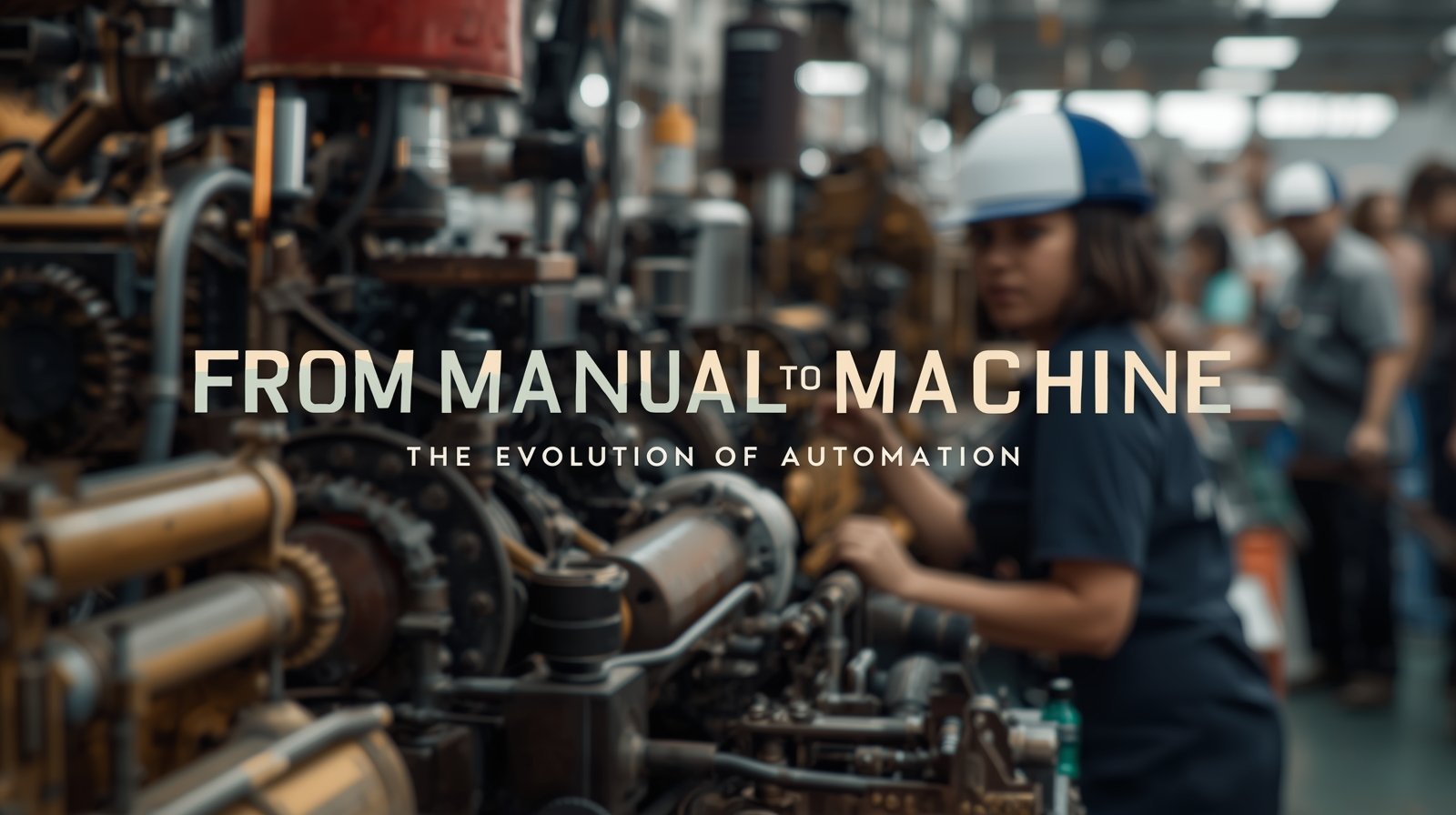
From Manual to Machine: The Evolution of Automation

Automation is the systematic process of transferring human labor to machines and digital systems. It defines the transformation of production, communication, and management in the modern economy. The evolution of automation reflects continuous progress in technology, engineering, and data science.

From early mechanical tools to advanced artificial intelligence systems, automation has changed how industries function, how organizations operate, and how people interact with work. This article explains the historical development of automation, the stages that shaped its growth, and the implications it continues to have across industries.


1. The Origins of Automation

The earliest stage of automation began with manual tools designed to increase efficiency. Pre-industrial societies used basic mechanical systems to perform repetitive tasks such as grinding grain or weaving fabric. These innovations represented the first attempts to reduce physical labor through controlled mechanical motion.

Mechanical Foundations:
Simple machines—pulleys, levers, and gears—formed the foundation of early automation. They transferred human or animal energy into mechanical output. While limited in complexity, these systems demonstrated the possibility of replacing continuous human effort with predictable mechanical movement.

Water and Wind Power:
Water wheels and windmills automated motion-based labor. They enabled large-scale grinding, milling, and pumping without human or animal input. These technologies marked the beginning of industrial automation principles: consistent power delivery and repeatable operation.

The Human Role:
During this period, human operators maintained control over mechanical systems. Automation existed only in partial form, requiring oversight to initiate, maintain, and adjust the process.

This early foundation established the principles of automation—power substitution, repeatability, and reduction of manual dependence.


2. The Industrial Revolution and Mechanization

The Industrial Revolution was the first large-scale shift from manual to mechanized production. It introduced the use of steam power, complex machinery, and assembly systems.

Steam Power and Machinery:
The steam engine transformed industry by enabling continuous mechanical motion. Factories could now operate independently of natural energy sources such as wind or water. Machines powered by steam replaced hand-operated tools in textiles, mining, and transport.

Assembly and Standardization:
Manufacturing processes became structured. Parts were standardized to fit specific machines, allowing repetitive production. This formed the basis for later mass production techniques.

Automation of Process Flow:
Production moved from individual craftsmanship to coordinated machine-driven systems. Tasks were divided into repeatable units handled by specialized machines or workers. Efficiency increased, and output expanded significantly.

Early Control Systems:
Mechanical governors and regulators maintained machine performance without manual intervention. These mechanisms were early examples of feedback control—an essential concept in modern automation.

The Industrial Revolution demonstrated that machines could manage sustained physical work, marking the beginning of automation as an industrial force.


3. The Age of Electrical Automation

The introduction of electricity in the late nineteenth and early twentieth centuries expanded automation’s potential. Electric power replaced steam and enabled smaller, faster, and more reliable machines.

Electrification of Industry:
Factories transitioned to electric motors, which provided direct and controllable power. This change allowed independent operation of individual machines and flexible layout design.

Control Circuits:
Basic control circuits were developed to start, stop, and regulate machines. Switches, relays, and timers became standard components in automated systems.

Telecommunications and Signaling:
The invention of telegraphy and early telephone systems introduced electrical communication, which later supported industrial coordination and process control.

Emergence of Early Robots:
The first programmable mechanical devices appeared, performing simple repetitive motions based on electric signals. These early robots operated within fixed parameters, laying the groundwork for automation in manufacturing.

Electrical automation allowed more precise control, faster response, and increased safety, driving progress toward automated production lines.


4. The Digital Transformation and Computerized Control

The mid-twentieth century marked a major transformation as computers entered industrial environments. Automation evolved from mechanical and electrical systems to digital control.

Numerical Control (NC):
Introduced in the 1950s, NC machines used punched tape instructions to control manufacturing equipment. This allowed consistent, repeatable, and programmable operations.

Programmable Logic Controllers (PLCs):
In the 1960s and 1970s, PLCs replaced hardwired control panels. They offered software-based programming that could be updated easily. PLCs became the foundation of factory automation.

Computer-Aided Design (CAD) and Computer-Aided Manufacturing (CAM):
Computers began to integrate design and production. CAD allowed digital creation of product designs, and CAM converted them into machine instructions.

Data Acquisition Systems:
Sensors and data recorders collected operational data, enabling real-time monitoring and optimization of machine performance.

Digital automation allowed industries to transition from fixed mechanical operations to flexible, programmable systems. This reduced setup time, improved accuracy, and opened the path toward autonomous production.


5. The Rise of Robotics

Robotics became a core component of industrial automation in the late twentieth century. Robots introduced mobility, precision, and endurance into repetitive or hazardous environments.

Industrial Robots:
The first robotic arms were introduced in the 1960s. These machines executed pre-programmed movements for welding, painting, and material handling. Controlled through motors and sensors, they operated continuously without fatigue.

Integration with Control Systems:
Robots connected with PLCs and computer networks. Factories implemented automated lines that combined human supervision with machine execution.

Safety Systems:
Automation required new safety standards. Barriers, sensors, and interlocks were developed to protect workers in automated environments.

Expansion Beyond Manufacturing:
Robots moved into medical, logistics, and agricultural applications. Automation expanded from factories to services and research environments.

Robotics represented a significant stage in automation’s evolution, transforming the concept from machine control to intelligent mechanical operation.


6. The Internet Era and Networked Automation

The 1990s and early 2000s introduced network connectivity, which reshaped automation through data sharing and coordination.

Supervisory Control and Data Acquisition (SCADA):
SCADA systems allowed remote monitoring of industrial operations. They collected data from sensors and transmitted it to central computers for analysis and control.

Distributed Control Systems (DCS):
Complex processes such as chemical production used DCS to coordinate multiple automated units through communication networks.

Internet Integration:
The expansion of the internet enabled remote management of systems. Machines could send performance data to remote operators in real time.

Machine-to-Machine (M2M) Communication:
Devices began communicating directly, forming the basis of modern Internet of Things (IoT) networks. Automated systems became interconnected, enabling synchronized operations.

Networked automation increased transparency, reliability, and scalability across industrial systems.


7. Artificial Intelligence and Machine Learning in Automation

The integration of artificial intelligence (AI) and machine learning (ML) represents the most recent phase in automation evolution. These technologies allow machines to analyze data, identify patterns, and improve performance without explicit reprogramming.

Predictive Maintenance:
AI models analyze sensor data to forecast equipment failures. Maintenance is scheduled based on predictions rather than fixed intervals.

Process Optimization:
Machine learning algorithms study production data to adjust parameters automatically for higher efficiency.

Autonomous Systems:
Automation now extends beyond programmed tasks. Robots, vehicles, and software systems operate with real-time decision-making capabilities.

Natural Language Processing (NLP):
Automation systems can now interpret human language, enabling voice-activated controls and intelligent support bots.

AI-driven automation signifies a transition from pre-defined control to self-adaptive systems. Machines no longer just execute instructions—they evaluate outcomes and adjust accordingly.


8. Automation Across Industries

Automation impacts every major sector. Its evolution has diversified applications across manufacturing, healthcare, logistics, agriculture, finance, and energy.

Manufacturing:
Automation manages assembly, quality inspection, and packaging. Robots and control systems ensure precision and consistency.

Healthcare:
Administrative and diagnostic processes are automated through data systems, imaging analysis, and telemedicine platforms.

Finance:
Transaction processing, fraud detection, and reporting rely on automated systems to manage high-volume operations.

Logistics:
Automated warehousing and route optimization software manage global supply chains efficiently.

Agriculture:
Smart farming systems automate irrigation, soil monitoring, and harvesting based on sensor data.

Energy:
Power plants and grids use automation for load balancing, fault detection, and predictive maintenance.

This broad adoption shows how automation’s principles—efficiency, consistency, and data-driven control—apply universally.


9. The Human and Economic Dimensions

Automation changes the relationship between human labor and technology. It redefines the skills required in the workforce and influences global productivity.

Workforce Transformation:
Routine manual roles are declining, while roles in programming, system management, and data analysis are expanding. Workers now supervise, maintain, and optimize automated systems rather than perform repetitive actions.

Skill Development:
Education and training programs are adjusting to emphasize digital literacy, problem-solving, and analytical capabilities.

Economic Impact:
Automation increases production efficiency and lowers operational costs. However, it also introduces structural shifts in labor markets that require adaptation policies.

Human–Machine Collaboration:
Modern automation focuses on coexistence between humans and machines. Systems are designed to support human oversight while executing operational tasks independently.

This relationship continues to evolve as automation becomes more intelligent and integrated.


10. The Future Direction of Automation

The future of automation extends beyond isolated machine control toward unified, adaptive systems that integrate artificial intelligence, robotics, and data networks.

Cognitive Automation:
Future systems will analyze unstructured data, make contextual decisions, and optimize entire workflows dynamically.

Edge Computing and IoT Expansion:
Automation will increasingly rely on distributed intelligence, where data is processed near its source to reduce latency and improve responsiveness.

Autonomous Infrastructure:
Industries such as transportation, logistics, and manufacturing are developing self-managed systems capable of continuous operation and self-diagnosis.

Sustainability and Resource Management:
Automation will play a role in environmental monitoring and energy optimization, supporting sustainable industrial growth.

Ethical and Governance Frameworks:
As automation expands, organizations and governments must define clear policies for data privacy, accountability, and transparency.

The future of automation will involve coordination between technology, policy, and human expertise. The goal is not full replacement of human activity but improved system management and collective productivity.


11. The Evolutionary Summary

The path from manual labor to machine-driven systems spans centuries of innovation. Each stage introduced tools that enhanced precision, speed, and scalability.

  • Pre-industrial stage: Manual tools and basic mechanics.
  • Industrial stage: Steam-powered machinery and assembly lines.
  • Electrical stage: Electrification and control circuits.
  • Digital stage: Computers, PLCs, and data monitoring.
  • Robotic stage: Physical automation with programmable motion.
  • Networked stage: Connectivity and real-time communication.
  • Intelligent stage: AI and machine learning-driven systems.

Each phase built upon the last, transforming automation from mechanical motion to data-driven intelligence.

The transition continues, guided by advances in computing power, data storage, and algorithmic design.


12. Challenges in Automation Adoption

Despite progress, automation faces several challenges that organizations must address.

Integration Complexity:
Combining old and new systems requires coordination between hardware, software, and human operators.

Cybersecurity:
Automated systems connected to networks face threats from unauthorized access and data manipulation.

Cost of Implementation:
Initial setup and infrastructure development can be expensive, especially for small enterprises.

Data Management:
Automation depends on accurate and reliable data. Poor data quality can reduce effectiveness and create errors.

Workforce Adjustment:
Transitioning to automated systems requires retraining and adaptation, which can be difficult in traditional sectors.

By addressing these challenges, organizations can ensure that automation continues to advance safely and efficiently.


13. The Continuous Nature of Automation Evolution

Automation is not static; it evolves continuously with each technological generation. The timeline of progress suggests that automation follows an iterative cycle:

  1. Innovation: New technology is developed.
  2. Adoption: Industries apply it to improve operations.
  3. Integration: Systems are linked to form networks.
  4. Optimization: Data analysis improves performance.
  5. Redefinition: Human roles and workflows adapt.

This cycle repeats as each generation of technology introduces more capable and interconnected systems. Automation thus represents an ongoing transformation rather than a completed shift.

10 Everyday Tasks You Can Automate Right Now

Automation is part of modern work and personal life. It allows people to complete routine operations with minimal manual involvement. By automating daily tasks, individuals and organizations can reduce time spent on repetitive work and focus on analysis, strategy, and decision-making.

This article explores ten daily tasks that can be automated using tools, software, and digital systems available today. Each example demonstrates how automation contributes to efficiency and reliability.


1. Email Management

Email is one of the most common areas where automation saves time and effort. Many professionals spend hours every day reading, sorting, and responding to messages. Email automation helps manage this process through filtering, categorization, and scheduling.

Automated Filters:
Email platforms such as Gmail, Outlook, and Zoho Mail allow users to set filters that automatically move incoming messages into defined folders. This keeps the inbox organized and ensures priority messages are easy to find.

Auto-Responses:
Out-of-office replies and standardized responses can be created for common inquiries. This ensures that important communication continues even when users are unavailable.

Newsletter and Spam Management:
Unwanted subscriptions can be removed automatically through tools that detect and unsubscribe from mailing lists. This reduces clutter and improves email visibility for important messages.

Scheduling Tools:
Emails can be scheduled for delivery at optimal times using built-in scheduling features. This supports consistent communication without requiring manual sending.

Email automation not only supports individual productivity but also aligns team communication by ensuring timely delivery and proper categorization.


2. Calendar Scheduling

Managing meetings and appointments is another repetitive task that automation can streamline. Digital calendars integrated with scheduling software allow for automatic coordination between multiple participants.

Automated Scheduling Tools:
Platforms like Calendly, Microsoft Bookings, and Google Calendar automate meeting setup. Users share availability links, and invitees select open time slots. The system updates all connected calendars automatically.

Reminders and Notifications:
Automated reminders reduce missed meetings and ensure participants receive updates without manual follow-up. Reminders can be sent via email, SMS, or push notifications.

Time Zone Coordination:
Global teams benefit from automated time zone conversion. The system adjusts schedules automatically to local time, preventing confusion and overlap.

Recurring Events:
Weekly or monthly events can be set to repeat automatically, eliminating the need to re-enter details.

Automating calendar tasks ensures consistency and saves administrative time in both corporate and personal environments.


3. Data Backup and File Management

Digital data requires constant organization and protection. Manual file management can lead to errors and loss. Automated backup systems ensure that information remains secure and recoverable.

Cloud-Based Backup Systems:
Services such as Google Drive, Dropbox, and OneDrive automatically sync and back up files. Users can define folders to be synchronized continuously, ensuring that data is always up-to-date.

Version Control:
Automated systems store previous versions of files. If an error occurs, earlier versions can be restored without manual intervention.

Automated Organization:
Scripts and software can rename, sort, and archive files based on defined rules such as date, file type, or project name.

Scheduled Backups:
Local and cloud backups can be set to occur at regular intervals, ensuring consistent protection without requiring user input.

Automation in data management reduces the risk of data loss and ensures continuity of operations.


4. Social Media Posting

Social media platforms require consistent posting to maintain audience engagement. Doing this manually across multiple accounts can be time-consuming. Automation simplifies the process.

Post Scheduling:
Tools such as Buffer, Hootsuite, and Later allow users to schedule posts for multiple platforms in advance. The software automatically publishes at designated times.

Cross-Platform Management:
Users can create a single post that the system adjusts and publishes across networks like Facebook, LinkedIn, and X (formerly Twitter).

Performance Tracking:
Automation tools gather data on engagement metrics such as reach and interaction rates. Reports are generated without manual analysis.

Content Curation:
Some platforms automatically recommend content to share based on defined topics or keywords.

Automating social media posting ensures consistent communication while providing insights for strategy and planning.


5. Financial Tracking and Budgeting

Tracking income, expenses, and budgets is an ongoing task for both individuals and organizations. Automation ensures accuracy and consistency in financial data management.

Expense Tracking:
Applications such as Mint, QuickBooks, and Expensify automatically categorize transactions from connected bank accounts and credit cards.

Invoice Generation:
Recurring invoices can be generated and sent automatically to clients, ensuring timely payment and record maintenance.

Bill Payments:
Automated payment systems prevent late fees by scheduling recurring payments for utilities, rent, and services.

Budget Monitoring:
Automated alerts notify users when spending exceeds defined limits or when unusual activity occurs.

Financial automation improves visibility, supports decision-making, and eliminates repetitive administrative work.


6. Task and Project Management

Keeping track of daily tasks and projects is critical in professional environments. Automation ensures that progress, deadlines, and updates are handled systematically.

Task Creation and Assignment:
Tools like Asana, Trello, and ClickUp allow users to automate task creation based on triggers such as incoming emails or project milestones.

Progress Tracking:
Status updates and notifications are generated automatically as team members complete assigned tasks.

Deadline Reminders:
Automated alerts notify responsible parties before deadlines. This ensures timely completion without manual follow-up.

Workflow Templates:
Projects with recurring structures can use automated templates that duplicate necessary tasks and schedules for each new project.

By automating task management, organizations reduce administrative overhead and maintain consistency across teams.


7. Customer Support

Customer service functions benefit significantly from automation. It provides faster response times and consistent service quality.

Chatbots:
Automated chat systems handle basic inquiries and direct complex questions to human agents. This reduces wait time for customers.

Ticketing Systems:
Platforms like Zendesk or Freshdesk automatically assign support requests based on category or priority.

Follow-Up Messages:
After issue resolution, automated systems send follow-up messages or surveys to collect feedback.

Knowledge Bases:
Self-service portals provide automatic answers to common questions based on user input.

Automation in customer support ensures that clients receive consistent service while reducing manual workload for staff.


8. Home Management

Home automation focuses on controlling systems such as lighting, temperature, and security without direct interaction.

Smart Devices:
Thermostats, lighting systems, and appliances can operate based on schedules or sensors.

Energy Management:
Automation systems adjust lighting and climate control based on occupancy, optimizing energy use.

Security Systems:
Cameras, alarms, and locks can activate automatically when users leave or return home.

Routine Scheduling:
Household chores like cleaning can be automated through devices such as robotic vacuums.

Home automation contributes to efficiency and safety by managing routine operations continuously.


9. Content and Document Creation

Content creation involves repetitive tasks such as formatting, proofreading, and distribution. Automation reduces manual work in these areas.

Templates and Formatting:
Word processors and design tools can apply predefined templates automatically to maintain consistency across documents.

Transcription Tools:
Speech-to-text automation converts audio recordings into written transcripts for meetings and interviews.

Document Distribution:
Reports and newsletters can be sent automatically to distribution lists based on schedules or triggers.

Version Control:
Collaboration platforms automatically update shared documents, ensuring users access the latest version.

This form of automation increases productivity in writing, publishing, and communication processes.


10. Personal Productivity and Habits

Personal productivity involves daily routines that can be supported through automation. Habit tracking and time management systems simplify consistency.

Reminders and Notifications:
Apps such as Todoist, Notion, and Google Tasks allow automated reminders for tasks, events, and deadlines.

Time Tracking:
Automatic trackers measure how time is spent across applications and projects. Reports provide insights into work patterns.

Goal Monitoring:
Automation tools record progress toward defined goals and generate reports on completion rates.

Integration Across Tools:
Platforms like Zapier and IFTTT connect multiple apps to trigger actions automatically (for example, adding tasks from email to a to-do list).

Automation in personal productivity allows individuals to maintain structured routines and monitor performance over time.


The Broader Impact of Everyday Automation

Automation of daily tasks extends beyond time-saving benefits. It contributes to accuracy, consistency, and scalability in both personal and organizational contexts.

Time Optimization:
Routine work consumes a large portion of daily activity. Automating these tasks frees time for analysis, strategy, and collaboration.

Error Reduction:
Automated systems follow defined rules, minimizing errors caused by oversight or fatigue.

Scalability:
Once a process is automated, it can be expanded without proportional increases in effort or cost.

Integration:
Automation tools connect various platforms, creating unified workflows that eliminate redundant manual steps.

Adaptation:
As needs evolve, automation systems can be modified to handle new tasks, ensuring continued efficiency.

Everyday automation is not limited to professionals. Students, freelancers, and household users can benefit from implementing even small-scale systems that manage data, schedules, and communication.


Implementation Considerations

While automation offers broad advantages, it requires proper planning and monitoring.

1. Identify Repetitive Processes:
List all tasks performed regularly that follow predictable patterns. These are the best candidates for automation.

2. Select Reliable Tools:
Evaluate available software solutions based on security, compatibility, and support. Open integrations allow future scalability.

3. Define Rules and Parameters:
Automation works through logic. Clear instructions prevent errors and ensure accurate execution.

4. Monitor Performance:
Automated systems should be reviewed periodically to ensure they continue functioning correctly.

5. Train Users:
Understanding how automation works helps users troubleshoot minor issues and use tools effectively.

6. Ensure Data Privacy:
When connecting multiple platforms, protect sensitive information by using encryption and secure access settings.

7. Balance Automation and Oversight:
Some decisions still require human judgment. Automation should enhance, not replace, decision-making where context and nuance matter.

Proper implementation ensures that automation remains efficient, secure, and aligned with user goals.

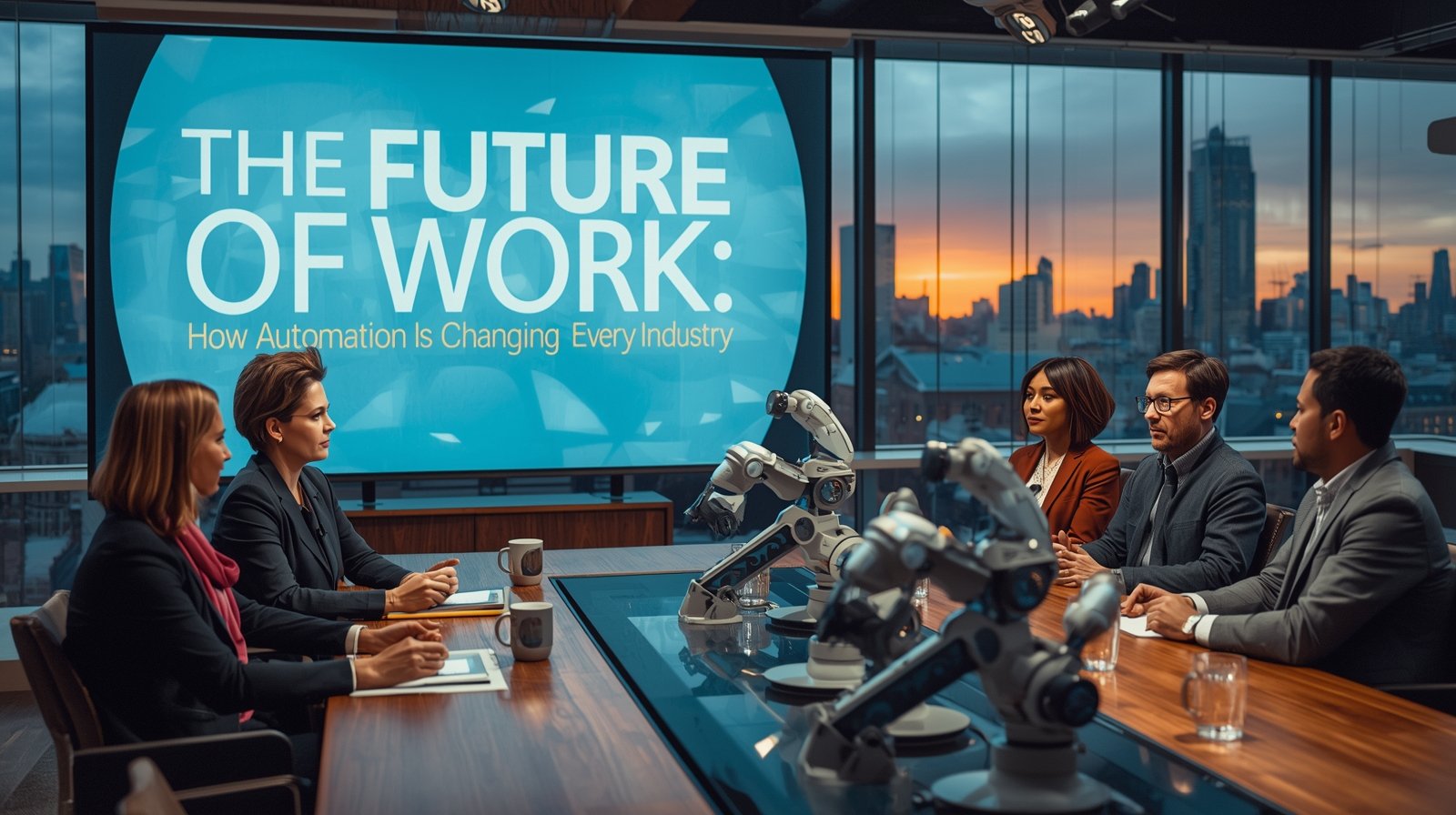
The Future of Work: How Automation Is Changing Every Industry

Automation is reshaping the structure of modern work. It is altering how organizations plan, produce, and deliver goods and services. Across industries, automation is no longer a choice but a requirement for staying competitive. The integration of machines, software, and data-driven processes is influencing productivity, operational efficiency, and the global economy.

Automation uses systems that perform defined tasks with minimal human input. These systems can be mechanical, digital, or hybrid. They rely on artificial intelligence, machine learning, robotics, and data analytics. The goal is to reduce manual involvement, optimize workflow, and enhance performance consistency.

The future of work depends on how well organizations adopt and manage automation. Every sector—from manufacturing to healthcare, finance, logistics, and retail—is seeing transformation. The following sections describe how automation is changing business operations across industries, its economic effects, and how companies can adapt.

  1. The Core of Automation in the Modern Economy

Automation operates on a foundation of three key components: process optimization, machine execution, and data control. Businesses use automation to eliminate repetitive operations and reallocate human labor to higher-value tasks. The shift began decades ago with mechanical systems and now includes intelligent algorithms that analyze data and make independent decisions.

In economic terms, automation drives productivity growth. It allows companies to maintain output with fewer resources. This process reshapes cost structures, profit margins, and pricing strategies. As automation evolves, it becomes integrated with digital transformation initiatives that align with cloud computing, Internet of Things (IoT), and predictive analytics.

Automation also supports real-time decision-making. Data collection from machines and sensors enables organizations to monitor operations and make immediate adjustments. This integration improves production accuracy and reduces downtime, forming the backbone of modern industry.

  1. Automation in Manufacturing

Manufacturing has been the primary field of automation for decades. Assembly lines once operated entirely with manual labor. Now, automated robotics perform assembly, welding, packaging, and quality control with high precision.

Robotic automation allows continuous operation, consistent output, and reduced error rates. Advanced systems also communicate with one another through industrial IoT platforms, forming what is known as “smart manufacturing.”

The impact extends beyond production. Supply chains now rely on automated forecasting, procurement, and distribution. Predictive maintenance systems analyze machine data to prevent breakdowns, saving time and cost.

Manufacturers that integrate automation see measurable performance improvements. Lead times shorten, waste declines, and product consistency improves. However, such transformation requires strong data infrastructure and workforce retraining.

  1. Automation in Finance and Banking

Automation in finance focuses on speed, accuracy, and security. Institutions use algorithms to process transactions, detect fraud, and manage compliance. Software-based robots, or “bots,” execute repetitive back-office functions such as data entry, verification, and reconciliation.

Trading systems rely on automation to analyze large datasets and execute trades at optimal times. Credit assessments and loan approvals now operate through digital platforms that review applications automatically using pre-set criteria.

In banking, chatbots and self-service portals provide 24-hour customer support. These tools reduce operational costs and improve client service consistency. Automation in finance also minimizes human error, particularly in accounting and auditing functions.

The financial sector demonstrates how automation can balance risk management with operational efficiency. As regulations evolve, automated compliance systems help institutions maintain accurate reporting and reduce penalties.

  1. Automation in Healthcare

Healthcare automation improves service delivery and administrative performance. Electronic health records allow instant data access across departments, reducing manual paperwork. Scheduling, billing, and inventory tracking now operate through automated systems.

In clinical settings, automation supports diagnosis and treatment planning. Imaging tools and AI-based systems can process scans and detect irregularities faster than manual review. Pharmacy automation ensures accurate medication dispensing and reduces inventory waste.

Laboratories use automated analyzers to process samples quickly and consistently. This shift allows medical professionals to focus on direct patient care rather than administrative workload.

Automation in healthcare also extends to telemedicine. Scheduling, patient monitoring, and data analysis occur through digital systems that operate continuously. While automation does not replace medical expertise, it enables greater efficiency and resource allocation.

  1. Automation in Retail and E-Commerce

Retail automation focuses on supply chain optimization and customer engagement. Inventory management, pricing, and logistics operate through automated software that reacts to demand patterns.

E-commerce platforms use automation to process orders, manage returns, and personalize marketing. Recommendation engines analyze browsing data to present relevant products to each user.

In physical retail, automated checkout systems reduce transaction time and labor requirements. Warehouses use robotic sorting systems to fulfill orders with minimal delay.

Automation allows retailers to scale operations without proportionally increasing workforce size. It also generates valuable data that supports market analysis, trend prediction, and customer relationship management.

  1. Automation in Logistics and Transportation

Automation defines modern logistics operations. Vehicles, drones, and warehouse systems work together to move goods efficiently. Route optimization software selects the most effective delivery paths using live traffic data.

Automated warehouses use conveyor systems and robotic arms to manage inventory. Tracking systems provide real-time visibility across supply chains. This transparency helps companies reduce delays and improve delivery accuracy.

Transportation automation includes autonomous vehicles and driver-assist systems that enhance safety and fuel efficiency. Ports and terminals employ cranes and cargo handling systems with automated control.

These systems make logistics more reliable and cost-effective. However, they require integrated digital platforms that can coordinate multiple data sources and operational units.

  1. Automation in Energy and Utilities

Energy automation manages production, distribution, and monitoring. Power grids use intelligent systems that detect faults and restore service automatically.

In renewable energy sectors, automation monitors turbine and solar performance, optimizing energy generation based on weather conditions. Pipeline systems use automation for leak detection and flow regulation.

Data-driven automation helps utilities predict demand and allocate resources efficiently. These systems improve sustainability by reducing waste and unplanned downtime.

Automation also supports energy transition strategies by integrating renewable sources with traditional infrastructure.

  1. Automation in Agriculture

Agricultural automation includes precision farming technologies, drones, and autonomous machinery. These systems measure soil, water, and crop conditions to guide planting and irrigation.

Automation improves yield forecasting and resource allocation. Drones collect aerial data, while robotic harvesters operate continuously.

Automated irrigation systems use moisture sensors to distribute water efficiently. Livestock monitoring systems use cameras and sensors to track health metrics.

This integration supports global food supply stability. Automation allows farmers to maintain output levels despite labor shortages and environmental pressure.

  1. The Economic and Workforce Implications

Automation reshapes labor demand. Routine tasks decline, while analytical and technical roles increase. Organizations must retrain employees for data management, system oversight, and digital coordination.

Economically, automation increases productivity, which can boost growth and lower production costs. However, it may also create transitional challenges for sectors with high labor intensity.

Governments and businesses face the responsibility of developing strategies that support workforce reskilling. Educational institutions also need to align curricula with digital competencies.

The balance between human labor and automation determines long-term stability. Rather than eliminating jobs entirely, automation changes their nature. New roles emerge in system design, maintenance, and analysis.

  1. The Future Outlook for Automated Industries

Automation will continue expanding through artificial intelligence, machine learning, and connected infrastructure. The next phase involves self-learning systems that adapt to new environments without direct programming.

Industries will increasingly rely on integrated platforms that link production, logistics, and service operations. Data analytics will play a central role in optimizing business decisions.

The future of work depends on collaboration between humans and machines. Organizations that align their strategies with automation will maintain competitive advantage. The ability to analyze, interpret, and apply data will define success across industries.

Automation also contributes to sustainability. Efficient resource use, waste reduction, and predictive maintenance all support environmental and economic goals.

The Impact of Artificial Intelligence on Digital Marketing in 2025

Artificial intelligence (AI) has become a central part of how businesses approach digital marketing. In 2025, AI continues to shape strategies, automate workflows, and help companies connect with their audiences more effectively. The tools and systems powered by AI are no longer optional but essential for brands that want to stay competitive.

AI-driven marketing helps companies collect, analyze, and act on customer data faster and more efficiently. It enables personalization, improves targeting accuracy, and supports better decision-making. Understanding how AI impacts digital marketing in 2025 is key for marketers and small business owners who want to adapt and grow in a rapidly changing landscape.


1. The Role of Artificial Intelligence in Modern Marketing

AI in marketing refers to the use of machine learning, data analysis, and automation tools to improve campaigns and customer engagement. Instead of relying solely on human intuition, AI processes vast amounts of data to find trends, predict outcomes, and optimize marketing performance.

By 2025, almost every major marketing platform uses some form of AI. Whether it’s search engine optimization, ad placement, content creation, or customer service, AI enhances how brands communicate with consumers.

AI supports marketing teams by providing insights into what audiences want, how they behave, and what motivates them to take action. This allows marketers to deliver relevant content and offers at the right time.


2. AI-Powered Personalization and Targeting

Personalization has always been a goal in marketing, but AI has made it far more precise. Algorithms can now study user data such as browsing history, purchasing behavior, and engagement patterns to predict what products or services a person might be interested in.

In 2025, AI systems can create audience segments automatically and tailor marketing messages for each one. For example, AI-driven tools help email marketers adjust subject lines, images, and calls-to-action for each recipient. This leads to higher open rates and conversions.

Personalized marketing powered by AI also extends to websites and social media. Recommendation engines suggest products or articles based on user preferences. Chatbots guide visitors toward relevant options, creating a smoother user experience without human intervention.


3. Predictive Analytics in Marketing Strategy

Predictive analytics is one of the most important contributions of AI to digital marketing. Using data models, AI can forecast customer behavior, market trends, and potential outcomes of campaigns.

For instance, predictive tools can identify which leads are most likely to convert or which customers may stop engaging with a brand. This information helps marketers take proactive steps, such as offering loyalty rewards or adjusting campaigns before issues arise.

By 2025, predictive analytics has become integrated into major marketing platforms. Businesses use these insights to guide spending decisions, target ads more efficiently, and understand what content performs best. Predictive models transform marketing from a reactive to a proactive discipline.


4. AI in Content Creation and Optimization

Creating content remains at the core of digital marketing, but AI has changed how that content is produced and optimized. Tools powered by natural language processing (NLP) assist in generating written materials such as blog posts, product descriptions, and ad copy.

AI systems can suggest topics, optimize headlines, and recommend keywords for search engine visibility. Marketers still guide the creative direction, but AI handles repetitive or data-heavy tasks that take time.

In 2025, generative AI tools are advanced enough to produce multimedia content such as videos, graphics, and voiceovers. They help brands maintain consistent output while improving quality and efficiency.

Optimization is another key area. AI analyzes user engagement data to recommend updates or improvements to published content. This ensures that blogs, videos, and ads remain relevant and effective over time.


5. AI in Advertising and Campaign Management

Digital advertising relies heavily on automation, and AI has become the driving force behind it. In 2025, most advertising platforms, including Google Ads, Meta Ads, and programmatic systems, depend on AI for bidding, targeting, and ad placement.

AI analyzes massive amounts of data in real time to determine where and when to show an ad. It optimizes campaigns based on performance metrics, ensuring that marketers get the best return on investment.

Dynamic ad creation is another area influenced by AI. Marketers can input a set of assets—such as images, headlines, and descriptions—and AI combines them in multiple ways to test performance. The system then prioritizes the combinations that perform best.

AI also prevents ad fatigue by identifying when an audience has seen a particular ad too often and automatically rotating in new versions. This keeps campaigns efficient and user engagement high.


6. Chatbots and Virtual Assistants in Customer Interaction

Chatbots powered by AI have become standard tools for digital marketing. They provide 24/7 customer support, answer common questions, and help guide users through websites or online stores.

In 2025, chatbots use natural language understanding (NLU) to interpret context and intent more accurately. They not only respond to questions but also recommend products, share personalized content, or schedule appointments.

Businesses benefit from chatbots because they improve response time and reduce operational costs. Customers appreciate them because they receive immediate help.

AI-driven virtual assistants also support marketers internally by automating tasks such as campaign setup, reporting, and data visualization. This frees up human marketers to focus on strategic planning and creative development.


7. Voice Search and AI Optimization

Voice assistants like Siri, Alexa, and Google Assistant continue to change how users search for information. In 2025, voice-based searches account for a significant portion of all online activity.

AI helps marketers adapt by analyzing conversational search patterns. Traditional keyword strategies are replaced with natural language queries that reflect how people speak rather than type.

Brands now optimize their content for question-based phrases, long-tail keywords, and local intent. AI tools assist in restructuring website content to match how voice assistants interpret and deliver search results.

Voice-based marketing also extends to audio advertising and interactive experiences. AI identifies which audiences are most likely to engage with voice ads and tailors them accordingly.


8. AI and Email Marketing

Email marketing remains an effective tool, and AI makes it more strategic. Advanced algorithms track user engagement and adjust campaign timing, subject lines, and message content for better performance.

Marketers use AI to predict when a subscriber is most likely to open an email or click a link. The system then sends messages automatically at that time. AI also segments audiences more accurately, ensuring that content is relevant to each group.

By 2025, email platforms are deeply integrated with AI analytics. Marketers can see real-time reports showing which campaigns lead to conversions and which need adjustment.

AI also plays a role in reducing spam rates and maintaining sender reputation by analyzing recipient behavior and optimizing email frequency.


9. Data Privacy and Ethical Considerations

As AI becomes more powerful in marketing, data privacy remains a major concern. Consumers are aware of how their data is used and expect transparency.

Regulations such as the General Data Protection Regulation (GDPR) and the California Consumer Privacy Act (CCPA) require businesses to handle data responsibly. AI systems must be designed to comply with these rules.

Ethical AI marketing involves collecting only necessary data, providing clear consent options, and avoiding manipulation. Marketers in 2025 focus on building trust by being open about how AI tools use customer information.

Transparency not only meets legal requirements but also strengthens brand reputation. Companies that manage AI ethically gain long-term customer loyalty.


10. The Future of AI in Marketing Beyond 2025

The influence of AI in digital marketing will continue to expand beyond 2025. Advancements in machine learning, computer vision, and natural language processing will create even more efficient marketing tools.

Future systems will be able to interpret emotion, tone, and visual preferences, allowing for deeper personalization. Predictive modeling will evolve to anticipate market shifts before they happen.

AI will also play a key role in sustainability and social responsibility by helping businesses monitor and reduce environmental impact. Marketing strategies will increasingly rely on AI to track and report ethical performance metrics.

However, human creativity and judgment will remain essential. AI will handle data and automation, while human marketers will focus on storytelling, brand strategy, and emotional connection. The partnership between technology and human insight will define the next phase of marketing evolution.

AI in Fitness and Nutrition: How Smart Tech Personalizes Health

Artificial intelligence is changing how people manage fitness and nutrition. It is not only used in research or laboratories but has become part of everyday health routines. AI analyzes data, studies behavior, and provides recommendations that match each person’s goals. The technology adapts to real conditions, which helps users stay consistent and informed.

This article explains how AI works in fitness and nutrition, how it supports health goals, and what users should know about privacy, accuracy, and safe use.


1. The Role of AI in Modern Health Management

AI collects and interprets data from wearable devices, mobile apps, and sensors. It converts this information into insights about activity levels, sleep, diet, and overall wellness. The system identifies patterns that people may not notice themselves.

Machine learning models learn from large datasets, which allows them to predict energy use, detect performance trends, and even identify possible health risks. AI systems have become essential in personal fitness planning and nutrition monitoring.


2. How AI Transforms Fitness

a. Smart Workout Tracking

AI-enabled devices record metrics such as heart rate, steps, and calories burned. These tools adjust workout intensity and suggest rest intervals based on live feedback. A user can monitor improvements in endurance and strength over time.

b. Virtual Personal Trainers

AI platforms act as trainers, guiding users through exercises and correcting form through computer vision. They assess movement angles and provide instructions for better posture and safety. This helps people train effectively even without a physical trainer.

c. Predictive Fitness Planning

Using stored workout data, AI predicts how a person’s body will respond to a certain routine. It modifies training schedules to prevent injury and improve results. The plans evolve with progress rather than staying fixed.

d. Recovery Monitoring

AI detects signs of fatigue through sleep quality, heart rate variability, and stress levels. It recommends recovery actions such as stretching or adjusting sleep schedules.


3. AI and Personalized Nutrition

a. Data-Driven Meal Planning

AI meal-planning tools analyze health goals, dietary restrictions, and calorie targets. They generate daily or weekly meal plans that match nutritional needs. The system learns from user feedback and refines future suggestions.

b. Food Recognition and Tracking

Image-based recognition apps identify foods from photos and estimate nutrients. This removes manual entry errors in diet logs and saves time for users who track intake daily.

c. Adaptive Nutrition Coaching

AI nutrition coaches integrate body metrics, exercise logs, and preferences. They monitor changes such as weight, energy levels, or blood glucose to adjust plans automatically.

d. Integration with Health Devices

Smart kitchen tools and wearable sensors can sync data directly. A connected ecosystem links step counts, water intake, and meal composition into one dashboard.


4. Benefits of AI-Powered Fitness and Nutrition

  1. Personalization: Each plan is based on real data from the individual rather than a general formula.
  2. Efficiency: Automated analysis saves time that would otherwise go into manual tracking.
  3. Motivation: Instant progress feedback encourages consistency.
  4. Prevention: Early detection of fatigue or imbalance helps avoid injury or illness.
  5. Accessibility: AI brings structured guidance to people who cannot access professional trainers or nutritionists regularly.

5. Examples of AI Fitness Applications

a. Smart Wearables

Devices such as watches and rings use AI to analyze sleep cycles, heart rhythms, and activity levels. They provide daily summaries and long-term health trends.

b. Workout Apps

AI fitness apps design personalized exercise routines and evaluate performance. Some use video capture to check form and posture during workouts.

c. Connected Home Equipment

Smart treadmills, bikes, and mirrors adjust resistance and pace automatically through AI analysis. Users receive data-based feedback after each session.

d. Health Platforms

Integrated platforms link exercise, diet, and mental wellness data in one system. They allow users to visualize the relationship between physical and nutritional habits.


6. AI in Nutrition Tools

a. Nutrient Analysis Systems

AI systems scan meal photos and output nutrient profiles including macronutrients and micronutrients. This helps users maintain balanced diets without manual calculation.

b. Blood Sugar Monitoring

AI algorithms track glucose patterns and forecast how different foods affect energy and metabolism. This supports users managing diabetes or metabolic conditions.

c. Recipe Generation

AI models suggest recipes using available ingredients and dietary preferences. These systems can adapt to vegan, low-carb, or allergy-friendly plans.

d. Grocery Assistance

Some AI assistants build grocery lists based on planned meals and budget. They optimize food storage and reduce waste.


7. Health Data and Privacy

AI systems rely on personal health information. Secure data handling is essential. Reputable apps encrypt data and follow regulations such as HIPAA in the United States.

Users should review permissions and understand how data is stored or shared. Transparency in AI models builds trust and reduces risk of misuse.


8. The Science of Personalization

AI identifies correlations between inputs (diet, sleep, exercise) and outcomes (performance, recovery, mood). This creates feedback loops that continuously refine recommendations.

The process can be explained in three stages:

  1. Collection: Devices record activity, nutrition, and biometric data.
  2. Processing: Algorithms analyze trends and compare them with historical data.
  3. Output: The system recommends changes in training or diet to improve results.

This feedback process allows precise adjustments that human observation might miss.


9. AI in Preventive Health

AI can recognize signs of health changes before symptoms appear. Wearable sensors detect variations in heart rhythm or breathing patterns. Nutrition apps notice irregular nutrient intake.

By alerting users early, AI encourages preventive action rather than late correction. This approach shifts health management from reaction to prediction.


10. Integrating AI with Human Expertise

While AI provides analysis and efficiency, human professionals interpret context. Trainers and dietitians use AI data to design comprehensive plans. Collaboration between AI systems and human experts yields the best outcomes.

AI handles calculation and pattern detection, while people supply experience, empathy, and ethical guidance.


11. Impact on the Fitness Industry

Gyms and wellness centers use AI to track client progress and design membership programs. Online platforms provide personalized coaching without geographic limits.

This shift expands access to fitness services and reduces dependence on physical locations. It also introduces data-based evaluation of training effectiveness.


12. Impact on the Nutrition Industry

Food service companies use AI to develop healthier menus. Personalized meal delivery services base recipes on user profiles.

AI is also improving nutritional labeling and portion recommendations. Businesses can now adapt menus to consumer health data.


13. Challenges in AI-Driven Health

Despite progress, challenges remain:

  1. Data Accuracy: Incorrect or incomplete input reduces reliability.
  2. Bias in Training Data: AI may reflect patterns that are not representative of diverse populations.
  3. Over-Reliance: Users may depend too much on automation and ignore body signals.
  4. Cost and Accessibility: High-end devices remain expensive for some consumers.

Responsible design and regulation are needed to overcome these limitations.


14. Ethical and Legal Considerations

Developers and companies must ensure transparency in AI operations. Users should know how data is collected, analyzed, and stored.

Ethical AI includes fairness, privacy protection, and user consent. Governments and organizations are developing frameworks to guide responsible use.


15. The Future of AI in Fitness and Nutrition

Future AI systems will combine multiple data sources such as genetics, microbiome analysis, and continuous monitoring. This will refine personalization even further.

Integration with virtual reality may create immersive exercise experiences. Real-time biometric feedback will improve precision in workouts and diet choices.

AI could eventually serve as a lifelong health companion that evolves with each individual’s needs.


16. Education and Awareness

Understanding AI helps users make informed choices. Public education about digital health literacy ensures that people can interpret data correctly.

Users should learn to question outputs, verify information, and maintain healthy skepticism about automated advice.


17. The Economic Perspective

AI health technology creates opportunities for startups and professionals. Wearable production, software development, and data analysis industries continue to grow.

Businesses benefit by offering personalized wellness programs, while consumers gain access to affordable support tools.


18. AI and Mental Wellness

Some AI systems track mood and stress using voice or typing patterns. Combined with fitness and nutrition data, this gives a broader view of well-being.

Mindfulness apps now use AI to recommend breathing exercises or rest intervals when stress levels rise.


19. Collaborative Ecosystems

AI works best within connected ecosystems. Integration across apps and devices gives users a full picture of health.

For example, a smartwatch records steps, a food app tracks meals, and a sleep monitor evaluates rest. AI merges these streams into one profile for analysis.

From Chatbots to Creators: The Rise of Generative AI

Artificial intelligence has shifted from simple automation to systems that can create. The move from rule-based chatbots to generative AI has changed the way technology interacts with people. This change is influencing communication, art, writing, business, and problem solving. Generative AI uses data and learning algorithms to produce new text, images, code, or music that did not exist before.

This article explains how generative AI developed, how it works, and how it is shaping industries and daily life in 2025. It also discusses the limits, ethics, and future direction of AI creation.


1. What Is Generative AI

Generative AI refers to machine-learning systems that create new outputs from existing data. Instead of recognizing or classifying information, these systems generate new content based on patterns they have learned. They rely on neural networks, especially large language models and diffusion models, to predict the next word, pixel, or sound in a sequence.

The goal is not only to process data but to build something new. This includes text creation, image generation, code writing, music composition, and video synthesis.


2. How Generative AI Evolved

The earliest AI systems were built to follow rules. Chatbots like ELIZA in the 1960s used scripts to mimic conversation. These early systems could not understand meaning or context.

Machine learning in the 1990s allowed models to learn from data instead of fixed rules. Deep learning in the 2010s improved this further. When OpenAI introduced GPT models and image generators such as DALL-E, it became clear that AI could learn creative patterns.

By 2023, generative AI was used by millions of people. Businesses adopted it for marketing, healthcare, design, and customer support. The transition from static automation to generative systems marked a turning point for technology and society.


3. The Core Technology Behind Generative AI

a. Neural Networks

Generative models depend on deep neural networks that simulate how the brain processes information. They contain multiple layers that extract features from raw data.

b. Transformers

Transformers improved text generation by allowing models to focus on relationships between words and ideas across long sequences. This architecture powers systems like GPT, Claude, and Gemini.

c. Diffusion Models

For images, diffusion models generate high-quality visuals by gradually refining noise into recognizable pictures. They enable tools that can produce detailed, realistic images from text prompts.

d. Reinforcement and Fine-Tuning

These models are trained further with feedback to align them with user intent and reduce harmful or inaccurate outputs.


4. Chatbots: The First Step Toward Generative AI

Chatbots were the first common use of conversational AI. Early systems could only answer predefined questions. Modern chatbots, powered by large language models, understand context and tone.

Customer service, healthcare triage, and online education now use conversational agents that adapt to users in real time. Chatbots have become digital assistants rather than static programs.

Generative AI builds on this by moving from conversation to creation. Instead of only answering, it generates original material for users.


5. From Conversation to Creation

Generative AI extends beyond interaction. It produces essays, blog posts, ad copy, and social media content. In design, it generates logos, marketing visuals, and brand layouts. In coding, it writes and debugs software.

Musicians and filmmakers use AI to draft melodies, edit scripts, or enhance visual effects. Researchers use it to summarize studies and discover new molecules.

This expansion has changed workflows. People collaborate with AI tools rather than replace human input.


6. Generative AI in Business

Businesses use AI to reduce manual work and speed up creative processes. Marketing teams generate ideas, headlines, and posts in minutes. Designers use text-to-image models to visualize campaigns.

Small businesses use AI to manage emails, handle customer queries, and analyze trends. These tools allow them to compete with larger organizations.

AI also supports data analysis, helping leaders make informed decisions. Predictive models estimate demand, improve logistics, and optimize pricing.


7. Generative AI in Healthcare

Healthcare uses generative AI to create new molecules, predict protein structures, and assist in diagnosis. Doctors can use AI summaries to interpret scans or medical records faster.

Language models generate patient instructions and translate complex data into understandable terms. This increases efficiency and supports better care.

Ethical oversight remains essential, as medical data involves privacy and accuracy concerns.


8. Generative AI in Education

In classrooms and online learning platforms, AI generates lesson plans, quizzes, and study guides. Students use AI to summarize notes or explore complex ideas.

Educators integrate these tools to personalize instruction. Adaptive learning systems adjust content to each student’s level.

However, there are concerns about plagiarism and overreliance. Balanced use is necessary to maintain original thinking.


9. Generative AI and Creativity

Generative AI has opened new forms of creativity. Artists and writers collaborate with models to explore ideas. It allows people with limited technical skills to express themselves through code, design, or animation.

AI art has also raised debates over authorship and copyright. Some creators see it as a tool for innovation, while others fear it could replace original work.

The future of creativity may involve humans guiding AI rather than competing with it.


10. Ethical and Social Considerations

As AI becomes more powerful, questions arise about how it is used. Key issues include:

  • Bias: Models learn from human data, which can include unfair patterns.
  • Transparency: Users need to understand how outputs are generated.
  • Privacy: Data used for training should be collected and stored responsibly.
  • Accountability: Clear policies are needed to define responsibility for AI actions.

Governments and companies are now building frameworks to ensure safe use. Responsible AI development balances progress with social values.


11. Generative AI and Employment

AI automation influences how people work. Routine tasks are replaced, but new roles emerge in prompt design, model supervision, and AI ethics.

Writers, marketers, and analysts use AI to enhance productivity rather than remove jobs. The key skill is learning to collaborate with AI systems.

Upskilling and digital literacy are now critical for long-term employability.


12. Generative AI in Communication and Media

Journalism uses AI to produce data-based reports quickly. Social media relies on AI to recommend content and manage engagement.

This transformation changes how people access information. It increases speed but also raises concerns about misinformation.

Media organizations are adopting fact-checking systems and watermarking to identify AI-generated content.


13. Regulation and Governance

Governments around the world are drafting rules to manage generative AI. The European Union’s AI Act and U.S. federal frameworks address risk levels, transparency, and user consent.

Companies must disclose when content is AI-generated and ensure that training data complies with privacy laws.

The goal is to promote innovation while protecting users from misuse.


14. The Economic Impact of Generative AI

Generative AI contributes to productivity growth by automating creative and cognitive tasks. It reduces time and cost in industries such as marketing, design, research, and software.

New business models are forming around AI tools, consulting, and infrastructure. However, the benefits are uneven, and smaller firms need access to affordable tools to stay competitive.

Long-term growth depends on education and adaptation.


15. The Future of Generative AI

The next stage of development may combine multimodal systems that process text, image, sound, and motion together. These unified models will power personalized digital assistants, simulation tools, and autonomous creative systems.

AI will likely become a standard part of daily life, embedded in devices and services. The challenge will be to keep its use aligned with ethical and human values.


16. Human and AI Collaboration

The most productive outcome is partnership. Humans provide context, emotion, and purpose, while AI handles repetition and data scale.

In workplaces, AI assists with research, drafting, and brainstorming, leaving humans to refine and decide. This collaboration model will define future productivity.


17. Education for the AI Era

To adapt, education systems are shifting focus toward digital literacy, ethics, and critical thinking. Students learn to question sources, design prompts, and evaluate AI output.

Public understanding of AI helps society use it safely and effectively.


18. Limitations of Generative AI

Despite rapid progress, generative AI has limits:

  • It lacks awareness and understanding.
  • It can generate false or inconsistent information.
  • It depends on large data and computing resources.
  • It requires human oversight for context and judgment.

Recognizing these limits prevents misuse and ensures that AI remains a tool, not a replacement for human reasoning.


19. Case Studies of Generative AI Adoption

a. Marketing Firms: AI tools generate content and predict campaign performance.
b. Healthcare Startups: AI models design drugs faster than traditional methods.
c. Educational Platforms: Personalized tutoring improves learning outcomes.
d. Small Businesses: Automation reduces cost and improves outreach.

These examples show that generative AI can be applied in almost any sector when used responsibly.

Ethical AI: Balancing Innovation and Responsibility

Artificial intelligence (AI) has become a central part of modern business, communication, and technology. From online recommendations to healthcare diagnostics, AI systems now influence many areas of life. As adoption grows, so do questions about fairness, accountability, and human responsibility.

Ethical AI refers to the practice of designing, developing, and deploying artificial intelligence in ways that respect human rights, ensure transparency, and avoid harm. Balancing innovation with responsibility means using AI to drive progress while protecting individuals and society from potential risks.

This article explores the meaning of ethical AI, why it matters, and how organizations can create systems that balance efficiency with trust.


1. What Ethical AI Means

Ethical AI involves principles that guide how technology is built and used. It is not limited to technical design but extends to governance, accountability, and long-term impact.

Key principles include:

  • Fairness and non-discrimination
  • Transparency in decision-making
  • Data privacy and protection
  • Human accountability
  • Safety and reliability

These principles ensure that AI benefits society while minimizing unintended consequences.


2. Why Ethical AI Is Important

AI makes decisions based on large datasets and algorithms. If these datasets include biases or incomplete information, the outcomes can be unfair or misleading.

For example, hiring tools may favor one demographic over another if historical data contains patterns of discrimination. Similarly, medical algorithms might underrepresent certain populations.

Ethical AI ensures technology aligns with human values, legal requirements, and public trust. Without ethical oversight, innovation can lead to inequality, misinformation, and data misuse.


3. The Relationship Between Innovation and Ethics

Innovation drives AI forward through continuous learning and experimentation. However, innovation without ethical boundaries can create systems that prioritize efficiency over fairness.

Balancing innovation and responsibility means asking questions such as:

  • Who benefits from this technology?
  • Who may be harmed or excluded?
  • Are the data sources transparent and consent-based?
  • Is there a process to correct bias or errors?

Ethical innovation ensures that progress supports collective well-being, not just technical advancement.


4. Core Principles of Ethical AI

a. Fairness:
AI should treat all individuals and groups equally. Fairness requires identifying and removing biases from datasets and algorithms.

b. Transparency:
Users and stakeholders should understand how AI makes decisions. Transparent systems explain their reasoning, enabling accountability.

c. Privacy:
AI must protect sensitive data and comply with regulations like the General Data Protection Regulation (GDPR) or the California Consumer Privacy Act (CCPA).

d. Accountability:
Human oversight must exist at every stage. Developers and organizations remain responsible for the outcomes of AI systems.

e. Reliability:
AI systems must perform consistently across different conditions and use cases.

These principles establish trust between technology developers, regulators, and users.


5. Common Ethical Challenges in AI

Despite growing awareness, ethical challenges remain widespread.

1. Data Bias:
AI systems learn from existing data, which may reflect social or cultural biases. This leads to discrimination in hiring, lending, or law enforcement decisions.

2. Lack of Transparency:
Some AI models operate as “black boxes,” making decisions without clear explanations. This reduces accountability.

3. Data Privacy Risks:
AI often requires large volumes of personal information, increasing risks of data breaches or misuse.

4. Job Displacement:
Automation can replace human roles, raising questions about labor ethics and retraining.

5. Misinformation:
AI-generated content can be used to spread false information, especially through synthetic media or deepfakes.

Addressing these challenges requires proactive regulation, responsible design, and continuous monitoring.


6. Ethical AI in Business

Businesses adopt AI for customer service, logistics, finance, and marketing. However, ethical risks appear when automation replaces human judgment or uses personal data without consent.

To apply AI responsibly, businesses should:

  • Audit algorithms for bias and accuracy.
  • Be transparent about data collection and usage.
  • Provide users with control over their personal information.
  • Train employees on responsible AI use.

For small businesses, implementing ethical AI builds customer trust and supports long-term growth.


7. Ethical AI in Healthcare

Healthcare uses AI for diagnostics, treatment recommendations, and patient monitoring. Ethical AI ensures these systems do not disadvantage certain populations or compromise privacy.

Key ethical considerations include:

  • Consent-based data collection.
  • Transparent algorithm development.
  • Equitable access to AI healthcare tools.

AI should complement healthcare professionals, not replace them. Ethical practices maintain patient trust and clinical reliability.


8. Ethical AI in Education

AI is increasingly used in education for grading, personalized learning, and student performance analysis.

Ethical implementation ensures:

  • Equal access for all students.
  • Clear communication about data collection.
  • Avoidance of bias in student assessments.

Education AI must enhance learning without reinforcing inequality or surveillance.


9. Government and Regulation of Ethical AI

Governments play a major role in shaping AI ethics through policies, standards, and enforcement.

Several countries, including the United States, have introduced frameworks promoting responsible AI.
Examples include:

  • The U.S. AI Bill of Rights initiative, emphasizing fairness, privacy, and transparency.
  • The European Union’s AI Act, categorizing AI applications by risk level.

Regulation ensures accountability while allowing innovation to continue responsibly.


10. AI and Data Privacy

AI depends on data to function. The ethical issue lies in how data is collected, stored, and used.

Best practices for ethical data use include:

  • Informed consent before data collection.
  • Secure data storage and encryption.
  • Anonymization of sensitive information.
  • Right to data deletion or correction.

Data privacy laws protect individuals, but ethical responsibility extends beyond compliance. Organizations must respect privacy as a core value.


11. Algorithmic Bias and Its Consequences

Bias in algorithms arises when training data reflects existing inequalities. This bias can lead to discriminatory outcomes in hiring, lending, and criminal justice.

To reduce bias, developers should:

  • Use diverse datasets.
  • Conduct bias testing before deployment.
  • Include multidisciplinary teams in design.

Awareness and correction of bias help AI systems operate more equitably.


12. Human Oversight and Accountability

Ethical AI requires human supervision at every stage of development and use.

Humans must remain responsible for outcomes, even when systems operate autonomously. Accountability frameworks should define who is liable when errors occur.

This oversight ensures that AI remains a tool serving human interests, not a decision-maker beyond control.


13. The Role of Companies in Promoting Ethical AI

Companies developing or using AI must establish clear internal policies.

Effective approaches include:

  • Creating AI ethics committees.
  • Publishing transparency reports.
  • Conducting regular audits.
  • Encouraging employee feedback.

Ethical leadership promotes trust and brand integrity.


14. The Role of Academia and Research

Universities and research institutions contribute by studying ethical implications and developing best practices.

Academic collaboration ensures AI aligns with human values and societal needs. Research on fairness, explainability, and social impact supports better system design.

Education also prepares future developers to apply ethical principles in real-world projects.


15. AI Ethics in the Workplace

Workplaces use AI for recruitment, performance monitoring, and productivity tracking.

Ethical use involves:

  • Transparent hiring algorithms.
  • Respect for employee privacy.
  • Clear communication about monitoring practices.

Employers should focus on enhancing workplace efficiency without compromising fairness or dignity.


16. The Role of Women in Ethical AI

Women professionals bring diverse perspectives that help identify ethical gaps in technology.

Encouraging women to participate in AI research, policy-making, and leadership improves fairness and inclusivity.

Women in data science, law, and social sciences play key roles in balancing innovation with human values.


17. Public Trust and Communication

Building public trust in AI depends on openness and education.

Organizations must explain how AI systems operate and why decisions are made. Clear communication reduces fear and misunderstanding.

Engaging communities in discussions about ethics helps align AI with public interest.


18. AI and Environmental Responsibility

AI systems require energy for data processing and model training. Ethical AI includes considering environmental sustainability.

Steps include:

  • Using energy-efficient data centers.
  • Optimizing algorithms for lower power consumption.
  • Offsetting carbon emissions from AI operations.

Responsible design ensures technological growth remains environmentally sustainable.


19. Future of Ethical AI

Ethical AI will continue to evolve as technology advances. Future priorities include:

  • Developing transparent and explainable AI systems.
  • Expanding global cooperation on AI governance.
  • Educating developers on ethical design.
  • Strengthening accountability laws.

AI’s future success depends on earning public confidence through responsible innovation.


20. Building an Ethical AI Framework

Creating a structured framework helps organizations apply ethical principles consistently.

A standard framework includes:

  1. Ethics Policy: Defines values guiding AI development.
  2. Risk Assessment: Identifies potential ethical and social risks.
  3. Transparency Measures: Provides clear system documentation.
  4. Oversight Mechanisms: Ensures human supervision.
  5. Evaluation: Regularly audits systems for fairness and performance.

This approach keeps innovation aligned with public interest and legal compliance.

AI for Small Businesses: Simple Ways to Boost Growth

Artificial intelligence (AI) is reshaping how businesses operate, compete, and serve customers. For small businesses, AI is not a luxury—it is a practical tool for saving time, improving decisions, and expanding growth. Once limited to large corporations, AI is now accessible and affordable for small enterprises across every industry.

This article explores how small business owners, especially women entrepreneurs, can use AI to enhance operations, improve marketing, and create long-term sustainability.


1. Understanding AI in Small Business

Artificial intelligence refers to the use of software that simulates human intelligence. It processes data, identifies patterns, and makes predictions or decisions based on information.

For small businesses, AI can automate routine tasks, manage customer interactions, analyze data, and support decision-making. Common AI tools include chatbots, recommendation systems, and data analytics platforms.

These technologies are available through affordable subscription models and easy-to-use interfaces. Business owners no longer need technical backgrounds to apply AI effectively.


2. Why AI Matters for Small Businesses

AI helps small businesses overcome limited resources. With fewer staff and smaller budgets, automation and analytics give owners the ability to compete with larger competitors.

Benefits include:

  • Faster decision-making using real-time insights
  • Improved customer service through automation
  • Better marketing targeting and personalization
  • Reduced operational costs
  • Efficient inventory and logistics management

AI levels the playing field, allowing small enterprises to scale without increasing overhead.


3. AI for Marketing and Customer Engagement

Marketing is one of the easiest and most profitable areas to apply AI. Small businesses can use AI-driven platforms to:

1. Personalize Marketing Campaigns:
AI tools analyze customer behavior to send relevant emails, recommendations, and offers. Personalized marketing increases engagement and conversion rates.

2. Automate Social Media:
Platforms like Buffer, Hootsuite, and Later use AI to schedule posts, track engagement, and suggest optimal posting times.

3. Predict Customer Behavior:
AI analytics forecast which products or services are likely to attract repeat customers.

4. Manage Customer Inquiries:
Chatbots on websites and social media provide instant responses, improving customer satisfaction while reducing manual work.

For women entrepreneurs running online stores or wellness services, AI tools can manage entire marketing funnels—from lead generation to customer retention.


4. AI-Powered Tools for Sales Growth

AI increases sales by analyzing customer data and improving product visibility.

Key applications include:

  • Recommendation Engines: Suggest products or services based on purchase history.
  • Dynamic Pricing Tools: Adjust prices automatically based on demand and competitor analysis.
  • Predictive Sales Analytics: Identify leads most likely to convert.

These insights allow small business owners to focus on profitable areas and reduce wasted effort.

Example: A small skincare business can use AI analytics to identify which products sell better in certain regions or during specific seasons.


5. Streamlining Operations Through AI

AI helps small businesses operate more efficiently by automating daily tasks.

Examples include:

  • Scheduling and calendar management.
  • Invoice processing and bookkeeping.
  • Email filtering and document organization.
  • Inventory tracking and reordering.

By integrating AI tools such as QuickBooks, Zapier, or Notion AI, business owners reduce manual workload and focus on strategy instead of administration.

Automation also minimizes human error, improving accuracy in operations and reporting.


6. Enhancing Customer Support with AI

Customer experience defines business success. AI improves service delivery through consistent and responsive communication.

Chatbots: Available 24/7, they answer FAQs, take orders, and resolve simple issues.

Voice Assistants: AI systems like Alexa or Google Assistant can help schedule appointments or manage reminders.

Sentiment Analysis: AI software monitors online reviews and feedback to identify customer satisfaction levels and potential concerns.

These tools allow small businesses to understand and serve their customers better, strengthening brand loyalty.


7. AI for Financial Management

Small businesses often face challenges in tracking expenses and maintaining budgets. AI simplifies this process through automation.

Key benefits:

  • Expense Categorization: AI tools classify transactions automatically.
  • Cash Flow Forecasting: Systems predict future expenses and revenue trends.
  • Fraud Detection: AI identifies unusual financial patterns in real time.

Platforms like QuickBooks AI, Xero, and Wave integrate with banks to provide accurate financial insights without manual entry.

Effective financial management leads to better decisions and sustained growth.


8. AI in E-Commerce

Online business owners benefit greatly from AI integration.

Applications include:

  • Product recommendations and cross-selling.
  • Automated ad placement through AI marketing platforms.
  • Customer segmentation for personalized promotions.
  • Inventory management and order tracking.

AI systems such as Shopify Magic, Wix ADI, and ChatGPT plugins help store owners automate store operations, optimize sales, and improve user experience.

AI tools can also detect fraudulent orders and prevent payment issues before they occur.


9. Using AI for Content Creation

Small businesses depend on consistent online content for visibility. AI assists in creating articles, product descriptions, and social media posts.

Popular tools include:

  • ChatGPT for drafting ideas and text.
  • Jasper for brand-specific content generation.
  • Canva Magic Write for visuals and marketing posts.

These tools accelerate content production while maintaining quality. Business owners can focus on strategy and creativity rather than repetitive writing tasks.

Content AI also helps identify trending keywords for better SEO performance.


10. AI for SEO and Website Optimization

Search engine optimization is vital for online visibility. AI makes SEO management more accessible.

AI capabilities include:

  • Keyword analysis and competitor tracking.
  • Content optimization for readability and structure.
  • Automated meta description and title generation.
  • Backlink analysis and website audits.

Tools such as SurferSEO, Clearscope, and SEMrush AI help websites rank higher on Google with less manual effort.

AI-driven SEO gives small businesses a sustainable digital presence without needing large marketing teams.


11. Improving Decision-Making with AI Analytics

AI collects and interprets data faster than humans, providing insights that guide business decisions.

Small business owners can use analytics dashboards to monitor:

  • Customer demographics and purchasing habits.
  • Product performance over time.
  • Marketing campaign results.
  • Seasonal trends.

These insights improve decision accuracy, reducing risk and uncertainty.

Example: A fitness brand may find through AI analysis that its online programs sell better on weekends, prompting schedule adjustments.


12. Building Better Customer Relationships

AI supports customer relationship management (CRM) by storing and analyzing client interactions.

CRM tools like HubSpot, Zoho AI, and Salesforce Einstein predict which customers need follow-up or personalized offers.

Automated reminders, targeted emails, and loyalty tracking help maintain strong customer retention rates.

AI also identifies at-risk customers early, allowing businesses to address issues before losing them.


13. Reducing Costs with AI

AI reduces business expenses by automating processes that would otherwise require staff time.

Savings come from:

  • Lower marketing and advertising costs through optimization.
  • Reduced customer service staffing via chatbots.
  • Fewer inventory shortages or overstock issues.
  • Streamlined payroll and accounting operations.

These cost reductions allow small businesses to reinvest in growth areas.


14. Cybersecurity and Data Protection

AI plays a vital role in securing small business data. Cyber threats can be detected and blocked automatically through AI-powered systems.

Security software using AI learns from attack patterns and prevents similar threats.

Functions include:

  • Email phishing detection.
  • Network intrusion monitoring.
  • Real-time alert systems.

AI-based cybersecurity ensures small businesses maintain trust and compliance with data protection regulations.


15. Integrating AI into Daily Operations

Successful AI adoption begins with small steps.

Recommended process:

  1. Identify areas where repetitive tasks occur.
  2. Research affordable AI tools suited to those needs.
  3. Start with trial versions to test value.
  4. Train team members on new systems.
  5. Measure results and expand use gradually.

Adoption should focus on solving real problems rather than using AI for novelty.


16. Overcoming Barriers to AI Adoption

Some small business owners hesitate to use AI due to cost or lack of understanding.

Solutions include:

  • Using free or low-cost AI platforms with clear tutorials.
  • Attending workshops or online courses for training.
  • Partnering with local digital consultants.

Public programs and business associations often provide AI literacy support for entrepreneurs.


17. Case Study: Women Entrepreneurs Using AI

Women-led businesses are increasingly integrating AI for growth.

Example 1: A nutrition coach uses AI scheduling tools to manage appointments and automate reminders.
Example 2: A boutique skincare brand applies AI analytics to identify top-selling ingredients and predict seasonal demand.
Example 3: A content creator uses AI software for video captions, image editing, and content planning.

Each example shows how automation and data insights create measurable progress without large teams.


18. AI and Business Growth Forecasting

AI predicts growth opportunities by evaluating sales, customer data, and market trends.

Business owners use AI forecasting tools to:

  • Anticipate demand changes.
  • Adjust pricing or inventory.
  • Plan marketing budgets.

Forecasting accuracy improves long-term planning and stability.


19. Ethical Use of AI in Small Business

Responsible use of AI is essential. Businesses must protect privacy, avoid biased decision-making, and maintain transparency.

Guidelines:

  • Inform customers when AI handles interactions.
  • Review data sources for fairness.
  • Maintain human oversight for important decisions.

Ethical AI practices build trust and support brand credibility.


20. Preparing for the Future

AI continues to evolve rapidly. Small businesses that adopt it early will be better positioned for future competition.

Future trends include:

  • Voice search optimization.
  • AI-driven supply chain management.
  • Predictive hiring and HR automation.
  • Augmented reality marketing experiences.

Entrepreneurs who learn these trends today secure long-term resilience in the digital economy.

How Women Can Thrive in the Age of Artificial Intelligence

Artificial intelligence (AI) is transforming industries, economies, and daily life. As workplaces evolve and technology takes on a greater role in human productivity, women stand at a defining moment in history. The integration of AI brings both opportunities and challenges, demanding new skills, adaptability, and leadership.

This article explores how women can thrive in the age of AI—by building digital literacy, leveraging automation, pursuing new careers, and ensuring equality in the technological revolution.


1. Understanding the AI Revolution

Artificial intelligence involves computer systems that perform tasks traditionally requiring human intelligence, such as analyzing data, recognizing patterns, and making predictions.

AI is now used in finance, healthcare, education, logistics, and creative industries. It affects how people work, communicate, and make decisions. For women, understanding AI is the first step toward participating fully in the modern economy.

Women make up a growing percentage of the workforce in industries being reshaped by automation, which means knowledge of AI applications is essential for long-term career growth.


2. The Changing Nature of Work

AI changes not only how jobs are done but also what kinds of jobs exist. Tasks that are repetitive or rule-based are increasingly automated, while roles that require emotional intelligence, strategic thinking, and creativity are expanding.

This shift means many traditional roles are being redefined. Women in administrative, education, and healthcare positions are seeing automation influence their work. However, these same fields offer new opportunities through AI-powered tools that enhance efficiency.

For example:

  • Teachers use AI to personalize student learning plans.
  • Nurses rely on AI for patient monitoring.
  • Entrepreneurs use AI to optimize business operations.

Adaptability and learning are the keys to remaining relevant.


3. Closing the Gender Gap in AI

Globally, women remain underrepresented in science, technology, engineering, and mathematics (STEM) fields. Increasing female participation in AI research and development is essential for building inclusive technologies.

Closing the gender gap requires collaboration between governments, institutions, and private companies. Initiatives such as mentorship programs, scholarships, and inclusive hiring practices help women access AI-related opportunities.

Representation in AI development is also critical for reducing bias in algorithms. Diverse teams create fairer, more ethical technology that benefits everyone.


4. Key Skills Women Need to Succeed in the AI Era

Thriving in the AI-driven world requires continuous learning. Women entering or already in the workforce can strengthen their careers by focusing on the following skill areas:

Technical Skills:

  • Data analysis and visualization
  • Machine learning basics
  • Coding and software tools

Soft Skills:

  • Critical thinking
  • Problem-solving
  • Communication and leadership

Digital Literacy:
Understanding how AI systems work, where data comes from, and how to interpret automated results.

These skills are transferable across sectors, helping women adapt to technological change in any industry.


5. AI and Entrepreneurship

AI lowers barriers to entrepreneurship by providing access to tools that manage marketing, sales, and operations efficiently. Women entrepreneurs use AI to start and scale businesses faster than ever.

Examples:

  • AI-driven e-commerce tools that automate inventory and customer support.
  • Marketing platforms that analyze audience behavior and improve targeting.
  • Financial tools that predict revenue and manage cash flow.

Entrepreneurs who adopt AI save time, make informed decisions, and compete globally without large teams or budgets.


6. Women in Leadership and AI Decision-Making

Leadership roles in technology remain male-dominated, but AI offers a chance to redefine this pattern. As organizations use AI to make strategic decisions, women in leadership positions influence how those systems are designed and deployed.

Women leaders contribute unique perspectives on ethics, fairness, and inclusion in algorithmic decision-making. Encouraging women to take leadership roles in AI governance ensures technology reflects broader human priorities.


7. Addressing Bias in AI Systems

AI systems learn from data that often reflects existing social biases. This can reinforce discrimination in hiring, lending, healthcare, and law enforcement.

Women working in AI and policy can help address this by:

  • Advocating for transparent data collection.
  • Promoting fairness in algorithmic design.
  • Participating in ethical review boards.

Active female participation in AI ethics ensures that automated systems promote equality rather than inequality.


8. AI in Education and Upskilling for Women

Education systems are adopting AI to personalize learning experiences and identify skill gaps. Women can benefit from accessible, flexible learning platforms powered by AI that offer courses in coding, analytics, and digital marketing.

Popular options include:

  • Online AI certification programs.
  • Virtual classrooms with adaptive learning paths.
  • AI tutors that provide feedback and study recommendations.

Continuous education is essential for career mobility in the evolving job market.


9. AI in Healthcare and Its Impact on Women

AI applications in healthcare have a direct impact on women both as professionals and patients.

For professionals: AI helps nurses, doctors, and healthcare administrators handle data, predict outcomes, and improve patient care.

For patients: AI-driven tools support early detection of diseases, fertility tracking, and maternal health monitoring.

By understanding these technologies, women can make informed health choices and contribute to improving the quality of medical care.


10. Balancing Work and Life Through AI

AI-powered tools help manage work-life balance by automating time-consuming tasks. Scheduling assistants, smart home systems, and financial apps simplify daily management.

Remote work platforms supported by AI allow flexibility, making it easier for women to balance family responsibilities with professional growth.

This flexibility strengthens long-term career participation and productivity.


11. Building Networks and Communities in AI

Networking is essential for professional advancement. Women can join AI-focused communities to share resources, mentorship, and collaboration opportunities.

Examples include:

  • Women in AI organizations.
  • Local tech meetups.
  • Online communities that provide peer learning and career advice.

These connections help women gain visibility and confidence in the technology sector.


12. AI and the Future of Creative Work

AI is influencing creative industries such as writing, design, and entertainment. Women in these fields use AI to enhance creativity, generate content ideas, and analyze audience trends.

For example, digital artists use AI to experiment with new styles, while writers use language models for editing and research.

Creativity combined with AI literacy creates new opportunities for innovation across the arts and media sectors.


13. Financial Inclusion Through AI

AI-based financial technologies expand access to banking and investment tools. Women entrepreneurs and small business owners benefit from automated accounting, digital payment systems, and credit assessments.

In developing economies, AI-powered mobile banking helps women gain financial independence by providing access to credit and digital payment solutions.

Financial inclusion is a key driver of equality and economic stability.


14. Women in AI Research

Academic research plays a major role in shaping how AI develops. Women scientists and engineers are contributing to areas such as natural language processing, machine learning, and computer vision.

Encouraging more women into AI research ensures diversity in innovation and helps address global challenges, including climate change, healthcare, and education.


15. The Role of Policy and Government

Governments influence how AI is developed and applied. Including women in policy-making ensures that AI laws address real-world concerns like labor rights, data privacy, and bias prevention.

Public policy can also promote gender equality by funding training programs and supporting women-owned AI startups.

Policy-driven inclusion strengthens both national innovation and social fairness.


16. The Impact of AI on Women’s Employment

Automation affects jobs differently depending on the sector. Women in administrative or service roles may see tasks automated, but AI also creates new opportunities in data analysis, digital marketing, and AI project management.

By focusing on retraining and adaptability, women can transition into emerging roles such as:

  • Data coordinator
  • AI ethics consultant
  • Digital product manager
  • Machine learning operations specialist

These positions emphasize collaboration between human oversight and automated systems.


17. Mentorship and Role Models

Mentorship is essential for growth in the AI field. Female professionals can learn from mentors who guide career development, skill-building, and confidence-building.

Highlighting successful women in AI inspires others to pursue similar paths. Public visibility of women in technology encourages young girls to enter the field.


18. The Importance of Ethical Awareness

As AI becomes embedded in decision-making, ethical awareness becomes essential. Women can play a leading role in ensuring that technology respects human rights, equality, and transparency.

Ethics training and inclusion in AI design processes help ensure that systems are fair and accountable.


19. Collaboration Between Men and Women in AI

Achieving equality in AI requires cooperation between all professionals. Collaboration fosters innovation and reduces bias.

Mixed-gender teams produce better outcomes by bringing multiple perspectives to problem-solving and system design.

Encouraging cooperation rather than competition ensures balanced progress in AI adoption.


20. Preparing for the Future of AI

The coming decade will see AI integrated into nearly every industry. To thrive, women must prioritize education, leadership, and adaptability.

Steps for success include:

  • Learning AI-related skills early.
  • Joining technology networks and conferences.
  • Pursuing leadership roles in AI projects.
  • Promoting ethical and inclusive use of technology.

Preparation and awareness will define how women shape the future of AI rather than simply adapting to it.